CROWNS
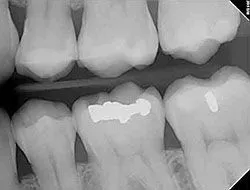
Crowns are full coverage restorations that are used to cover a tooth that is likely to break, or is too broken down to be restored with a filling. They are most commonly done after root canal treatment, or when a large filling wears out. The larger the hole made by a cavity that has to be treated, the more likely a crown will be needed. Even after a filling is put in a large cavity, a tooth is more likely to break. Keep in mind that the jaw muscles are the strongest in the human body. Teeth are subjected to tremendous pressures. Crowns ride over the weakened tooth, providing strength and protecting the tooth against breakage. A broken or cracked tooth is a far more serious matter and much more difficult to treat. Crowns prevent this, as well as making for a nice smile.
Crowns are full coverage restorations that are used to cover a tooth that is likely to break, or is too broken down to be restored with a filling. They are most commonly done after root canal treatment, or when a large filling wears out. The larger the hole made by a cavity that has to be treated, the more likely a crown will be needed. Even after a filling is put in a large cavity, a tooth is more likely to break. Keep in mind that the jaw muscles are the strongest in the human body. Teeth are subjected to tremendous pressures. Crowns ride over the weakened tooth, providing strength and protecting the tooth against breakage. A broken or cracked tooth is a far more serious matter and much more difficult to treat. Crowns prevent this, as well as making for a nice smile.
It takes two appointments to restore a tooth with a crown. In the first any decay is removed from the tooth and it is shaped to accept the crown. Then an impression is made of the tooth for use in fabricating a crown. Between the two visits the crown is made, usually of high-strength porcelain over gold alloy, all ceramic material, or gold. During this time a temporary crown is worn. In the second visit this temporary is removed. Then the permanent crown is adjusted as needed and then cemented in place.
ROOT CANAL TREATMENT
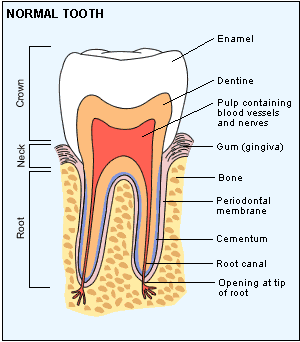
Root canal treatment (also referred to as root canal therapy or endodontic therapy) is made necessary when a cavity is allowed, through neglect, to reach all the way to this pulp. (Regular cleanings and checkups prevent and detect problems early) Sometimes deep restorations or trauma to a tooth may cause the nerve to be damaged to the point it needs root canal therapy, also. Once this occurs the pulp becomes infected, and can even extend through the root tip and begin to eat away at the surrounding bone (this is an abscess). By the time the pulp is infected it must be treated, and cannot heal on its own. It can even weaken the entire immune system. This is dangerous, not to mention very painful. Symptoms that the pulp has become infected may include sensitivity to hot/cold or sweets, pain, swelling, pain to biting or pressure, and a bad taste in the mouth. Sometimes, however, no symptoms are apparent and the person is unaware of any problem until a checkup.
A root canal is then performed to clean out the infected tooth pulp, and disinfect the canals of the tooth. The only other treatment would be to extract the tooth. Once the infection is resolved, the canal(s) are filled in to prevent any further infection. Usually a core build-up and crown is recommended for restoring a tooth that has had root canal therapy.
BRIDGES
This is an option for filling the space created by a missing tooth. It is formed to look like the missing tooth, and it takes its place in the mouth. The sides of a bridge use the two surrounding teeth for support, hence the name. A bridge replaces the missing tooth, both functionally and cosmetically. Bridge work is as much an art as it is an exact science. The materials used may be gold alloys, porcelain bonded to metal alloy, or all ceramic material. The choice of material depends on requirements for strength, wear, and/or esthetics.
It is important that a missing tooth be replaced as soon as possible for several reasons. If not treated the teeth surrounding the gap begin to shift inward, creating a whole chain reaction of bad things. Teeth use their neighbors for support, and, with one missing, they start to "fall." As this worsens the bite changes in response to the pressure. This can eventually result in problems with the entire jaw, e.g. TMJ. The surrounding teeth deteriorate and it is just a matter of time before they, too, are lost. Gum disease becomes a serious problem, with the difficulty of treatment increasing as the neglect continues.
Prime-Scan; Digital Impression System
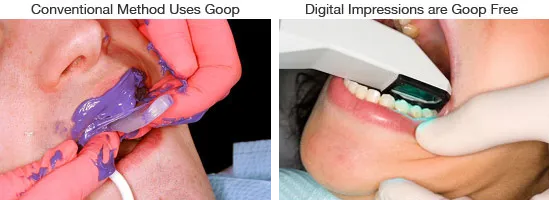
Conventional vs Digital Impressions
No more goop, gagging, or discomfort. Using an Prime-Scan, your dentist can take a highly accurate digital impression. The new technology completely eliminates the tray and putty impressions, where the experience is comparable to stuffing a big wad of gum in your mouth. The old technique is incredibly unpleasant and frequently results in taking multiple rounds of impressions that can be rejected, broken, or misplaced. Prime-Scan ensures a more accurate impression from the start, resulting in improved treatment and a more comfortable patient experience. Digital impressions give you the ability to see your teeth instantly in 3D, improving communication during the consultation and treatment process.
How does it work?
Prime-Scan digitally captures the structure of the teeth and gums using the latest optical technology. The scanner is a compact, hand-held wand. Once your dentist begins the scanning process, it can be stopped and started as many times as necessary.
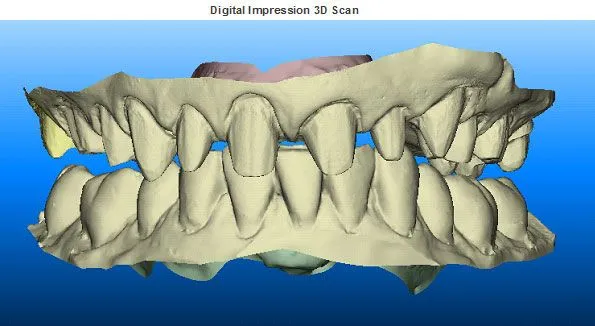
Your mouth is scanned with a radiation-free laser and, in as little as two to three minutes, the laser renders a digitally perfect, 3D impression of your teeth and soft tissue structures. Through digital software, you'll then be able to follow the progress of the scans, including a 3D model of your teeth on our computer screen. Prime-Scan can be used for any restorative treatment including crowns, veneers, inlays/onlays, bridges, and implants, as well as orthodontic treatments like Invisalign®.
Digital X-rays
Using the most advanced dental technology possible is just as important as staying up-to-date on the latest treatment techniques. Because our practice is dedicated to providing you with the safest and most convenient treatment options available, we utilize advanced digital X-ray technology in our office.
Digital X-rays provide several advanced imaging options designed to save time, provide clearer dental photos, and expose patients to less radiation than traditional X-ray technology.
Our practice is focused on making your dental experience as comfortable as possible. At your next appointment, we'll be happy to answer any questions you may have.